
What Is The Best Type of Placemat?
Have you ever hosted a dinner party or even a casual meal at home and realized that your table setting is missing something?
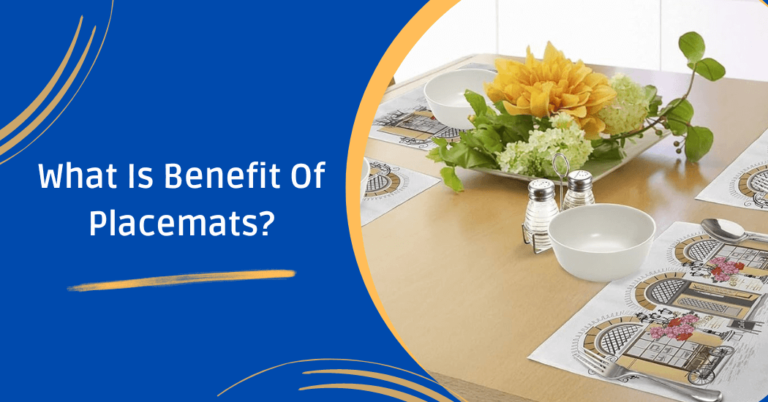
That’s where placemats come in. These simple yet versatile pieces of table decor protect your table from spills and messes and add style and personality to your dining experience.
However with so many available options it can be overwhelming to choose the right type of placemat for your specific needs.
In this blog post, we’ll dive into the world of placemats and explore what makes each type unique so you can decide which one is truly the best fit for your dining space. Get ready to elevate your next meal with the perfect placemat, let’s dig in!
TOP 5 Best Type of Placemat
When it comes to determining the best type of placemat it ultimately depends on your style, the occasion and the practical needs of your dining area.
Here are 5 popular types of placemats and their unique attributes:
1. Fabric Placemats
Often made from cotton or linen these placemats add a touch of elegance and can be easily washed. They come in various colors and patterns making them perfect for both formal and informal settings.
2. Vinyl Placemats
Highly practical and easy to clean vinyl placemats are great for everyday use. They are available in many designs and are resistant to spills making them ideal for families with children.
3. Bamboo or Wooden Placemats
For a more rustic or natural look bamboo and wooden placemats are excellent choices. They are durable and provide a sturdy base for dishes although they may require more care to maintain their appearance.
4. Chalkboard Placemats
A fun and interactive option chalkboard placemats allow guests to write notes or doodle while they eat. They are easy to clean and can add a playful element to your table setting.
5. Paper Placemats
Affordable and disposable paper placemats are perfect for casual gatherings and can be themed for specific occasions or holidays. If you’re looking for a more personalized option custom paper placemats can add a distinctive touch to your table setting while complementing your event or dining decor.
Ultimately the best type of placemat will enhance your dining experience while reflecting your taste and lifestyle. Consider the ambiance you want to create and choose a placemat that fits seamlessly into your dining decor.
Benefits of Each Type of Placemat
- Fabric Placemats: These placemats bring an elegant touch to any dining setting enhancing the overall aesthetic. Their washable nature also allows for easy maintenance making them both stylish and practical. Additionally the variety of colors and patterns available can complement any decor style.
- Vinyl Placemats: One of the biggest advantages of vinyl placemats is their durability and resistance to spills. They are incredibly easy to clean simply wipe them down after use making them perfect for busy households. Their flexibility in design also allows for a wide range of themes and decorations.
- Bamboo or Wooden Placemats: Apart from their rustic charm bamboo and wooden placemats are highly durable and can withstand heat well making them functional as well as decorative. They are perfect for creating a warm and inviting atmosphere complementing natural or casual dining settings.
- Chalkboard Placemats: These interactive placemats encourage creativity and engagement among guests. They provide a unique way to personalize each dining experience allowing for messages or drawings. Additionally they are easy to clean making them a fun yet practical choice.
- Paper Placemats: The primary benefit of paper placemats is their affordability and convenience. When choosing paper products used around food, it is also important to consider paper and paperboard components and their applicable food-contact requirements.
By understanding the benefits of each type you can make an informed choice that suits your dining needs while enhancing your overall experience.
Drawbacks of Each Type of Placemat
- Fabric Placemats: While fabric placemats are elegant they can be prone to staining especially if spills are not addressed promptly. They also require regular washing which can be inconvenient for those with busy lifestyles and may fade over time with frequent laundering.
- Vinyl Placemats: Although vinyl placemats are durable they can sometimes look less sophisticated compared to fabric options. They may also become slippery or may not be suitable for formal dining settings limiting their use for special occasions where elegance is desired.
- Bamboo or Wooden Placemats: The natural materials of bamboo and wooden placemats often require special care to maintain their appearance such as regular oiling or avoidance of soaking. They can also warp or crack if exposed to excessive moisture which might not make them the best choice for frequent or messy meals.
- Chalkboard Placemats: Despite their fun and interactive appeal chalkboard placemats can be challenging to clean if chalk residue is not properly wiped away. They may also be less suitable for young children who might accidentally create a mess with chalk dust.
- Paper Placemats: The disposable nature of paper placemats makes them convenient but they are not environmentally friendly especially if used frequently so always consider greener paper choices and the environmental impact of paper products. Additionally they can tear easily or lose their shape when wet which may detract from the dining experience if not handled carefully.
By considering these drawbacks you can better weigh the pros and cons of each type of placemat allowing you to choose the one that fits your dining style and needs most effectively.
Tips for Styling with Placemats
| Tip | Description |
|---|---|
| Layering | Combine placemats with table runners or tablecloths for a more dynamic look. This adds depth and visual interest to your dining setup. |
| Mix and Match | Don’t be afraid to mix different materials and patterns. Combining fabric and bamboo placemats can create a unique and appealing design that reflects your personality. |
| Colour Coordination | Select placemats that complement your dinnerware and decor. Consider the color wheel to create harmonious color schemes or use contrasting colors for a bold effect. |
| Seasonal Themes | Change your placemats according to the season or holidays to keep your dining area fresh and festive. This is an easy way to make your space feel celebratory. |
| Add Accents | Incorporate small decorative items such as flowers or candle holders on top of placemats to enhance the overall presentation and create a layered effect. |
| Functional Decor | Use placemats not just for aesthetics but also to protect your table. Choose designs that feature both beauty and practicality especially for family meals. |
| Size Matters | Ensure that the size of your placemats is appropriate for the table settings. Use larger placemats to accommodate bigger plates and cutlery for a balanced look. |
FAQs
Are fabric placemats worth the maintenance?
Yes fabric placemats can be worth the maintenance for their aesthetic appeal and ability to enhance a dining experience. However if you prefer low-maintenance options vinyl or disposable paper placemats may be more suitable.
Can I use placemats outdoors?
Yes many placemats can be used outdoors but it’s essential to choose materials that can withstand outdoor elements. Vinyl or bamboo options are often more durable and easier to clean after outdoor meals.
Which material is the easiest to clean?
Vinyl, plastic and silicone placemats are typically the easiest to clean as they can be wiped down with a damp cloth or washed under running water. Fabric placemats may require machine washing or spot cleaning while bamboo and wood placemats might need special care to prevent damage.
What size placemat should I use?
The size of the placemat should match the table and the dinnerware being used. Generally placemats should extend at least 6 inches beyond the plate’s edges to provide adequate coverage and balance.
Can I mix different types of placemats?
Absolutely! Mixing different types of placemats can create a visually interesting and unique table setting. You can combine materials such as pairing fabric placemats with bamboo ones or using a mix of colors and patterns that reflect your style. Just ensure that the combination remains cohesive and enhances the overall aesthetic of your dining area.
Final Words
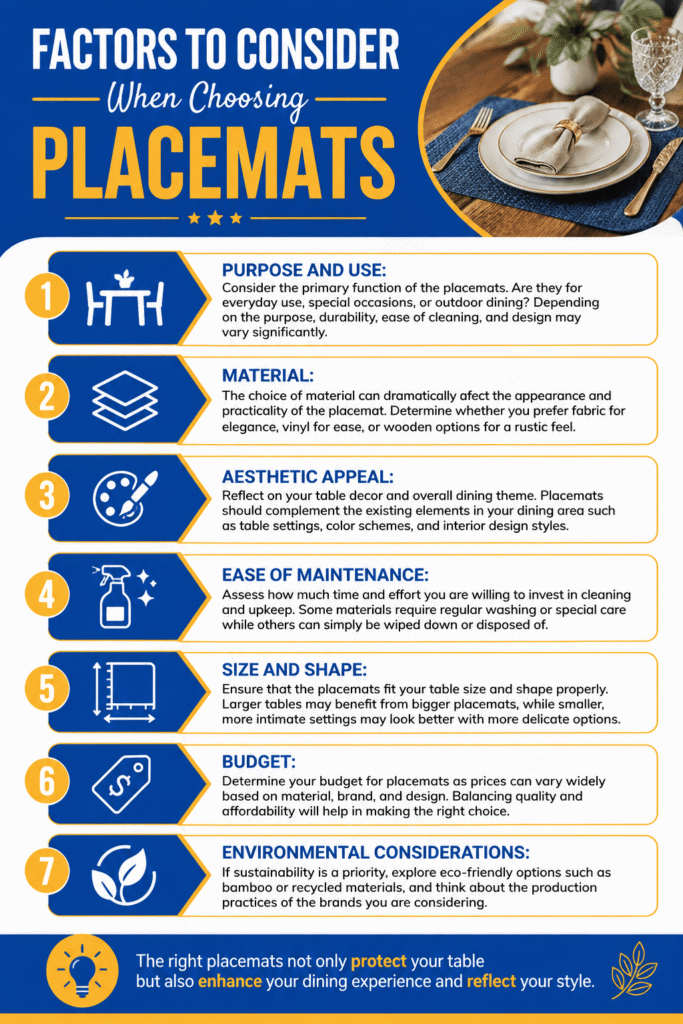
Choosing the best type of placemat ultimately depends on your specific dining needs, personal style and lifestyle preferences. Each material offers its advantages and disadvantages making it essential to consider the purpose of the placemats, ease of maintenance and the overall aesthetic appeal they will provide to your dining experience. For everyday use durable options like vinyl or washable placemat may serve well.
Additionally if sustainability is paramount, eco-friendly choices such as bamboo can be both appealing and responsible. Ultimately the ideal placemat harmonizes with your decor, meets your functional requirements and enriches your overall dining experience.